
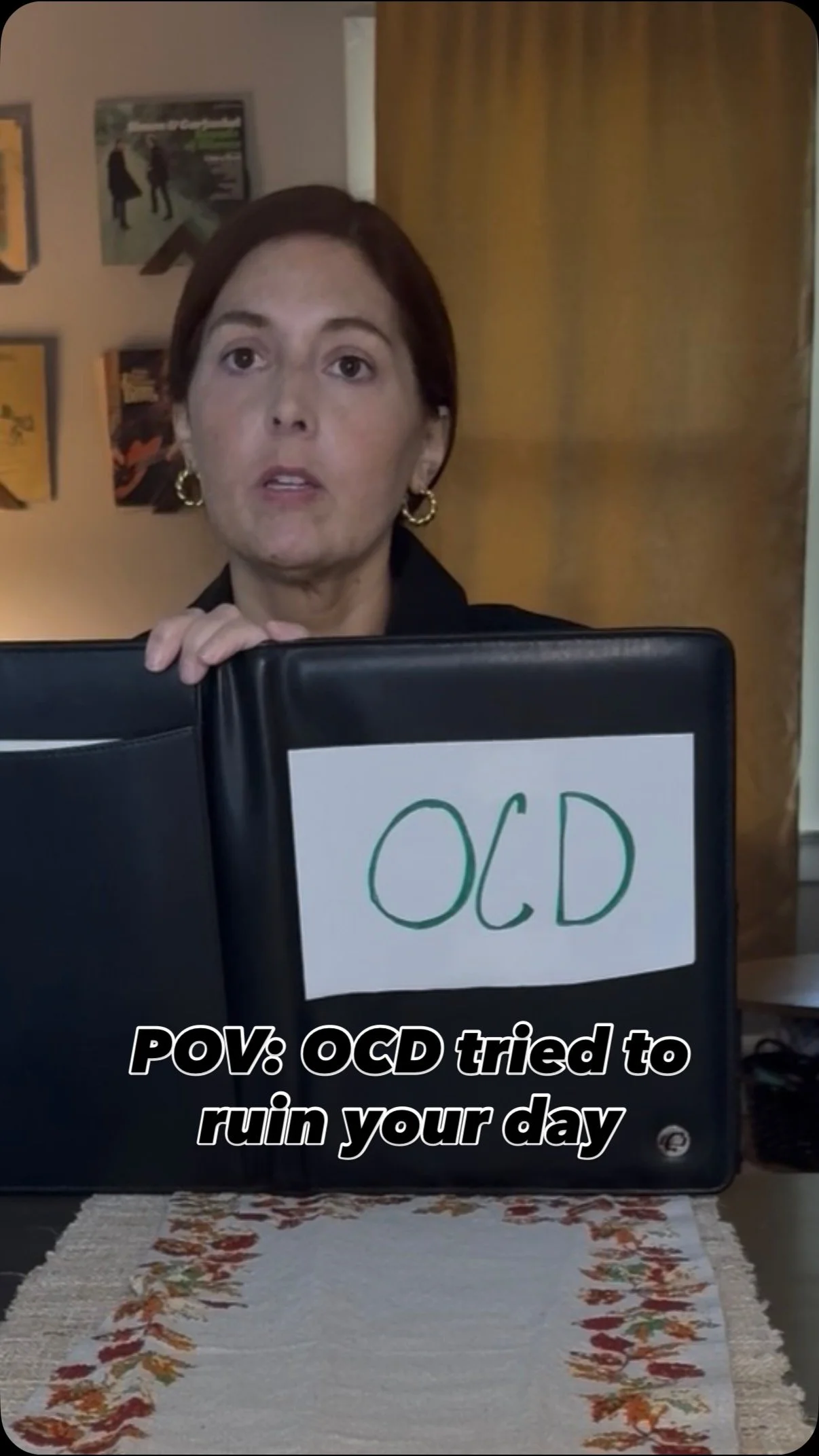
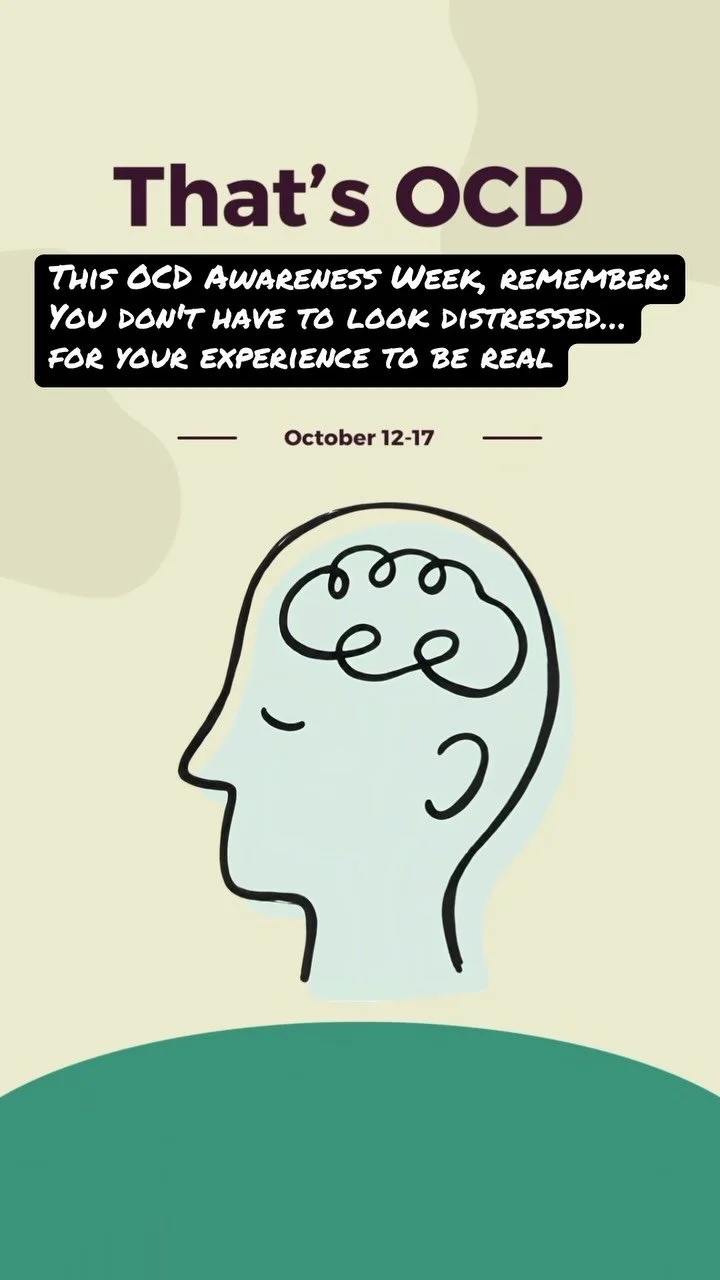
What OCD Feels Like
It’s asking “are you sure?”
Then needing to hear it one more time.
It’s living in the worst case scenarios while real life quietly passes you by.
It’s feeling responsible for things that were never meant for you to control
It’s replaying conversations late at night sacrificing sleep, searching for the moment you got it wrong.
It’s checking. Then checking that you checked.
It’s apologizing for things you didn’t do.
It’s needing certainty in a world that can’t give it
Its questioning your stories
It’s questioning your intentions
It’s questioning who you are
By: Christina Zambrano, LPN
It’s convincing yourself that watching your loved one’s location one more time means they’ll make it home safely.
It’s believing that if you can control everything nothing bad will ever happen.
It’s telling yourself, “just a few more minutes” while an hour slips away.
It’s staring at the little dot on the map, unable to pull yourself away, while the dishes pile up in the sink, laundry waits, your work goes unfinished, and the things you actually want to do gets pushed to the side.
It’s wanting to get up
But feeling trapped by the thought of you stop watching something bad will happen.
It’s seeking reassurance to soften the anxiety only for it to come back stronger and stronger every time.
It’s asking “are you sure?”
Then needing to hear it one more time.
It’s living in the worst case scenarios while real life quietly passes you by.
It’s feeling responsible for things that were never meant for you to control
It’s replaying conversations late at night sacrificing sleep, searching for the moment you got it wrong.
It’s checking. Then checking that you checked.
It’s apologizing for things you didn’t do.
It’s needing certainty in a world that can’t give it
Its questioning your stories
It’s questioning your intentions
It’s questioning who you are
It’s feeling guilty over thoughts you never wanted
It’s arguing with your mind until your exhausted
It’s your brain whispering “what if” until it sounds louder than reality
It’s knowing it doesn’t make sense and still feeling like you can’t stop
It’s losing hours trying g to stop a future that hasn’t happened
It’s mistaking fear for responsibility
It’s sacrificing your own peace because your mind is convinced that is what love looks like
It’s wanting freedom, but feeling like letting go would be reckless
When in reality it is ocd convincing you that enough checking, enough control, enough worry can guarantee safety….
Even though it never can
If this resonates with you, please know you are NOT alone and there is help! Evidence Based therapies like Exposure Response Prevention (ERP) has been proven to reduce symptoms significantly, allowing you to get back to living your life.
Do you follow us on Instagram?

When Canceled Plans Feel Both Like a Relief and a Disappointment
Many people assume social anxiety means someone doesn't like being around others. In reality, that's often not true. Most people with social anxiety want friendships, relationships, and meaningful connections. They simply experience so much anxiety around social situations that avoiding them begins to feel like the safest option.
By Christina Zambrano, LPN
If you've ever felt relieved when plans were canceled, and then found yourself feeling lonely afterward, you might have wondered, "What's wrong with me?"
The truth is, nothing is wrong with you.
This is one of the most common experiences people with social anxiety describe, yet it's something we don't talk about very often.
On one hand, canceled plans can feel like a weight has been lifted.
You don't have to think about what you'll wear.
You don't have to wonder if people will judge you.
You don't have to worry about awkward silences, saying the wrong thing, or replaying every conversation in your head afterward.
For a moment, your nervous system gets a break.
But then another feeling shows up.
Disappointment.
Loneliness.
Maybe even sadness.
Because while anxiety wanted you to stay home, another part of you genuinely wanted to connect with people.
That's one of the hardest parts about social anxiety.
It can make you fear the very thing you also long for.
Many people assume social anxiety means someone doesn't like being around others. In reality, that's often not true. Most people with social anxiety want friendships, relationships, and meaningful connections. They simply experience so much anxiety around social situations that avoiding them begins to feel like the safest option.
Avoidance can bring temporary relief, but over time it often makes anxiety stronger. The more our brains learn that staying home feels "safe," the harder it becomes to step outside our comfort zone the next time an opportunity comes along.
That doesn't mean the answer is forcing yourself into every party, every gathering, or every invitation.
Recovery isn't about becoming someone you're not.
It's about making choices based on what matters to you instead of what anxiety tells you to do.
Maybe that means meeting one friend for coffee instead of attending a large party.
Maybe it's staying for thirty minutes instead of three hours.
Maybe it's sending the text you've been putting off or saying yes to one invitation you've been tempted to decline.
Small steps count.
Over time, those small moments help teach your brain something important: you can tolerate discomfort, and meaningful connection is worth practicing.
If you've ever celebrated canceled plans while secretly wishing someone had reached out, you're not alone.
Social anxiety can make those two feelings exist at the same time.
And with the right support and evidence-based treatment, it doesn't have to stay that way.
You deserve a life where anxiety doesn't decide which opportunities you take, which friendships you build, or how connected you feel to the people around you.


The Plot Twist I Never Saw Coming: Finding Out My “Normal” Was OCD
I was handed literature on OCD, PTSD, anxiety disorders, and evidence-based treatments. I dove in headfirst. Mental health had always been close to my heart because I had struggled with anxiety since I was a teenager. I knew what it felt like to be overwhelmed by your own mind.
But then something unexpected happened.
I started taking intake calls.
Every day, people courageously shared their fears, intrusive thoughts, symptoms, and struggles with me. As I listened, I kept finding myself thinking:
"Wait... doesn't everyone think that way?"
By Christina Zambrano
If you had told me ten years ago that I would someday be writing a blog about OCD treatment, I probably would have laughed and then immediately spent three hours mentally reviewing the conversation to make sure I didn't accidentally offend you.
Which, in hindsight, should have been a clue.
Before joining Stress and Anxiety Services, I worked as a floor nurse for seven years. Like many healthcare workers, I was used to organized chaos, long shifts, and functioning on caffeine and determination. Then COVID happened
My husband and I were both considered essential workers, and suddenly we found ourselves facing a dilemma familiar to so many families: Who was going to stay home with our middleschool-aged son while he attended virtual school?
That's when I was given an opportunity that would completely change my life: a work-from-home position as an Intake Coordinator at Stress and Anxiety Services.
At first, I was excited simply to be working from home. Then came the crash course.
I was handed literature on OCD, PTSD, anxiety disorders, and evidence-based treatments.
I dove in headfirst. Mental health had always been close to my heart because I had struggled with anxiety since I was a teenager. I knew what it felt like to be overwhelmed by your own mind.
But then something unexpected happened.
I started taking intake calls.
Every day, people courageously shared their fears, intrusive thoughts, symptoms, and struggles with me. As I listened, I kept finding myself thinking:
"Wait... doesn't everyone think that way?"
"I've had thoughts like that my whole life."
"That's not unusual... right?"
The more calls I took, the more uncomfortable I became.
Clients would describe exhausting mental rituals, endless reassurance-seeking, replaying conversations, checking their memories, analyzing every possibility, and getting stuck in loops of doubt. Meanwhile, I was sitting there thinking, "Well yes, obviously. Isn't that just what having a brain is?"
What I didn't realize was that I had spent years performing mental gymnastics worthy of a gold medal. My brain wasn't simply thinking, it was running marathons. Constantly. Every thought became an investigation. Every uncertainty became a problem to solve. Every "what if?" demanded immediate attention.
No wonder I was exhausted.
Eventually, I reached out to one of the psychologists I worked with.
"Hey," I asked casually, "is this normal anxiety... or is this OCD?"
I was genuinely surprised by the answer.
The truth was that these patterns had affected my life for years. They affected my relationships. They affected my peace of mind. They affected how much energy I had available for the people and things I loved.
Most of all, they were stealing time.
Time spent ruminating.
Time spent seeking certainty.
Time spent trying to solve problems that didn't actually need solving.
Once I understood what was happening, I knew I wanted treatment. As much as I adored the clinicians I worked with, ethical guidelines meant I couldn't become a client of my coworkers. So I did what I encourage many people to do: I researched therapists who specialized in OCD and were specifically trained in Exposure and Response Prevention (ERP) therapy.
That distinction matters.
Not all therapists are trained to treat OCD. In fact, traditional talk therapy can sometimes unintentionally reinforce OCD symptoms because OCD isn't a problem of understanding your thoughts, it's a problem of how you respond to them. The gold-standard treatment for OCD is Exposure and Response Prevention (ERP), a specialized form of Cognitive Behavioral Therapy (CBT) that helps people gradually face uncertainty and stop engaging in compulsions and mental rituals. Research consistently identifies ERP as the most effective first-line treatment for OCD.
Many structured ERP programs are completed in approximately 12–20 sessions, although treatment length varies depending on symptom severity and individual needs.
Now, I know what some people are thinking.
"Twelve sessions? That sounds expensive."
Maybe.
But let's compare it to the cost of OCD.
How much is it costing you to spend hours every day trapped in rumination?
How much is it costing your relationships?
Your confidence?
Your sleep?
Your ability to be present?
Your freedom?
ERP isn't easy. It's challenging work. But it is absolutely worth the investment.
For me, treatment wasn't about becoming a different person. It was about finally having room to breathe. It was about learning that I didn't have to answer every intrusive thought, solve every uncertainty, or obey every fear my brain presented.
And here's something many people don't realize: even if a provider is out-of-network, many clients are able to receive reimbursement through their out-of-network insurance benefits. It's worth checking your coverage because specialized treatment is often more accessible than people assume.
If you're reading this and recognizing yourself in my story, I want you to know something important:
Intrusive thoughts do not define you.
Anxiety does not define you.
OCD does not define you.
You are not weak because you're struggling. And you are not destined to spend the rest of your life trapped in exhausting cycles of fear, doubt, and mental review.
I spent years believing my experience was simply "normal." Years thinking everyone else's brain worked the way mine did.
It turns out there was another way to live.
A quieter way.
A freer way.
And if I could go back and tell my younger self one thing, it would be this:
You don't have to keep carrying this alone.
Help exists. Treatment works. Recovery is possible.
And the freedom waiting on the other side is worth every step.

When ERP Isn’t Enough: How ACT Helps Clients Move Forward
When treating OCD and anxiety disorders, Exposure and Response Prevention (ERP) remains the gold standard.
Therapists know and trust the research. They understand the effectiveness of exposure therapy and the life-changing impact it can have on clients struggling with intrusive thoughts, compulsions, avoidance, and fear.
But what happens when a client can complete exposures and still feels trapped by anxiety?
What happens when they intellectually understand the work, but emotionally remain stuck?
By: Christina Zambrano, LPN
When treating OCD and anxiety disorders, Exposure and Response Prevention (ERP) remains the gold standard.
Therapists know and trust the research. They understand the effectiveness of exposure therapy and the life-changing impact it can have on clients struggling with intrusive thoughts, compulsions, avoidance, and fear.
But what happens when a client can complete exposures and still feels trapped by anxiety?
What happens when they intellectually understand the work, but emotionally remain stuck?
For many clinicians this can feel frustrating. You’re following evidence-based treatment protocols, the client is participating, and yet something still isn’t clicking. The anxiety may decrease temporarily, but the struggle with fear, discomfort, and control continues beneath the surface.
That doesn’t suggest treatment failed, and it definitely doesn’t mean all hope is lost.
This is often where Acceptance and Commitment Therapy (ACT) can become a powerful addition to ERP and anxiety treatment.
Acceptance and Commitment Therapy (ACT is an evidence-based behavioral therapy that helps clients develop psychological flexibility: the ability to experience difficult thoughts, feelings, and sensations without allowing them to dictate their lives. Rather than focusing solely on reducing anxiety, ACT helps clients learn how to make room for discomfort while still moving toward what matters most to them.
Through concepts like acceptance, cognitive defusion, and values-based action, ACT can help clients shift their relationship with anxiety instead of continuing the exhausting fight against it.
When integrated with Exposure and Response Prevention, ACT allows exposures to become more than exercises in tolerance. They become opportunities for clients to practice willingness, build meaning, and reconnect with their values…even in the presence of fear.
If you’re a therapist working with OCD or anxiety disorders and have encountered clients who feel “stuck” in traditional ERP, this conversation is for you.
Join us for our free webinar: ACT in Action: A Values-Based Approach to Exposure Therapy
This training will explore how Acceptance and Commitment Therapy can complement exposure therapy for OCD and anxiety, helping clinicians create more flexible, values-driven, and effective treatment approaches.

Why Summer Is Actually the Best Time for Kids, Teens, and College Students to Start Therapy
The goal of summer therapy isn’t to “fix” a child before school starts.
It’s to help them enter the next season feeling more supported, emotionally aware, and equipped to handle challenges in healthier ways.
When kids, teens, and college students learn coping skills during calmer months, they’re often better prepared when academic pressure, social stress, and busy schedules return.
And for parents, that can mean fewer crisis moments and more confidence knowing their child already has support in place.
By: Christina Zambrano LPN
For many parents, summer feels like a reset button.
The school-year chaos slows down. The constant homework battles ease up. Mornings become less stressful, grades are no longer front and center, and everyone finally has time to breathe.
So when anxiety and stress seem to improve during the summer months, therapy may not feel urgent anymore.
But surprisingly, summer is often the best time for kids, teens, and college students to begin therapy.
Not because things are falling apart, but because they finally have the time, space, and emotional energy to truly work on themselves before the next stressful season begins.
During the School Year, Most Kids Are Just Trying to Keep Up
Many parents notice the signs during the school year:
Increased anxiety
Emotional shutdowns
Irritability
School avoidance
Friendship drama
Burnout
Constant overwhelm
But between school, sports, activities, homework, and busy schedules, there’s rarely enough time to slow down and address what’s really going on underneath the surface.
Often, families spend the school year simply trying to make it through the week.
By summer, things may look better because the daily pressure has eased. But that doesn’t always mean the underlying stress, anxiety, or emotional struggles are gone.
It just means the environment has changed.
Summer Gives Kids and Teens the Mental Space They Don’t Have During the School Year
A lot of families wait until things become urgent:
Panic attacks start happening
Grades begin drop
Emotional meltdowns increase
Motivation disappears
School refusal becomes a problem
By then, everyone is already overwhelmed.
Summer therapy gives families the opportunity to get ahead of those struggles before the school year begins again.
It’s similar to strengthening muscles before a demanding sports season. Kids and teens can build emotional resilience, coping strategies, confidence, and communication skills before stress ramps back up.
Summer Is Especially Helpful During Big Transitions
Transitions are hard on young people, even when they’re exciting.
Summer often comes with major life changes:
Starting middle school
Entering high school
Preparing for college
Coming home from college
Graduating and figuring out adulthood
Parents often notice increased anxiety during these periods, even if their child can’t fully explain why.
Therapy can provide support during these transitions and help young people feel more emotionally prepared instead of overwhelmed.
College Students Often Need More Support Than Parents Realize
Many college students come home for the summer mentally and emotionally drained.
Even students who appear successful on the outside may be struggle with:
Anxiety
Burnout
Depression
Loneliness
Identity struggles
Fear about the future
Academic pressure
Summer gives them a rare chance to slow down and reconnect with themselves outside of campus stress.
For parents, it can also be one of the few times they’re able to help their college-aged child establish support before they return to school.
The Summer Schedule Makes Therapy Easier for Families
One practical reason summer works so well? Families are simply not stretched as thin.
Without packed school schedules, therapy appointments are often easier to consistently maintain.
And consistency matters.
When kids and teens attend therapy regularly, they have more time to build trust with their therapist and actually apply the tools they’re learning in real life.
Sometimes Summer Reveals What Was Hidden During the School Year
Interestingly, some parents notice emotional struggles more during summer.
Without the constant distraction of school and activities or the structure that goes along with it, signs of anxiety, sadness, low self-esteem, or social difficulties can become more noticeable.
You may notice your child:
Isolating more
Struggling socially
Losing motivation
Becoming emotionally reactive
Spending excessive time online
Expressing worry about the upcoming school year
These moments can be important signals that additional support could help.
Starting therapy in Summer Can Change the Entire School Year
The goal of summer therapy isn’t to “fix” a child before school starts.
It’s to help them enter the next season feeling more supported, emotionally aware, and equipped to handle challenges in healthier ways.
When kids, teens, and college students learn coping skills during calmer months, they’re often better prepared when academic pressure, social stress, and busy schedules return.
And for parents, that can mean fewer crisis moments and more confidence knowing their child already has support in place.
Therapy and IOPs Aren’t Just for Crisis Situations
One of the biggest misconceptions parents have is that therapy or IOPs are only necessary when things become severe.
In reality, earlier support often leads to better long-term outcomes.
Starting therapy (or increasing support during the summer) can help kids, teens, and college students build resilience before stress escalates again.

Normal Teen Mood Swings or Something More? How to Tell the Difference
When you found out you were expecting, you bought all the books. You know the ones—“What to Expect When You’re Expecting,” “The Happiest Toddler on the Block,” and so on. You made it through what felt like the hardest years of parenthood: the sleepless nights, the colic, the endless rocking.
And then things… settled. You found your rhythm.
But before you know it, your sweet child becomes a preteen or teenager, with a mood to match (no one warned you about that part), and you’re left wondering: Is this normal teenage behavior, or something more?
By: Christina Zambrano, LPN
When you found out you were expecting, you bought all the books. You know the ones—“What to Expect When You’re Expecting,” “The Happiest Toddler on the Block,” and so on. You made it through what felt like the hardest years of parenthood: the sleepless nights, the colic, the endless rocking.
And then things… settled. You found your rhythm.
But before you know it, your sweet child becomes a preteen or teenager, with a mood to match (no one warned you about that part), and you’re left wondering:
Is this normal teenage behavior, or something more?
The truth is, a lot is happening biologically in a teenager’s body. Hormones are shifting, emotions are bigger, and some anxiety and self-esteem struggles during these awkward years are completely normal, we’ve all lived through it.
But if you’re starting to notice behaviors that feel concerning—especially signs of anxiety or OCD—trust your parenting instincts.
So what does that actually look like?
Sign Up For Our Free Webinar For Parents
What are some teen anxiety symptoms?
Perhaps your teenager is repeatedly asking the same question and requires continuous reassurance. Maybe they’re avoiding certain places, situations, or even people. Maybe there are routines or rituals that have to be done a certain way, or else they become really distressed.
It can be confusing because on the surface it might look like typical teen behavior. But when anxiety or OCD is involved, it sticks, intensifies, and interferes with daily life.
How to help your teen with OCD and anxiety at home.
Before anything else, your home matters more than you think.
Not in a “perfect parenting” kind of way, but in the small, everyday interactions.
Your teen needs to feel safe talking to you, even if they don’t always take you up on it. That means keeping communication open, staying calm when they’re not, and trying not to jump straight into fixing everything.
It also means being mindful of something that feels helpful in the moment, but can actually make things worse long-term: reassurance.
Of course, you want to comfort your child. That’s instinct. But when anxiety or OCD is driving the questions, constant reassurance can accidentally feed the cycle.
To break the OCD reassurance cycle:
Instead of: “No, nothing bad will happen”
Try: “I know that feels really scary right now. I’m here with you.”
You’re supporting them…without reinforcing the fear.
What to avoid (even though it’s tempting)
Some of the most natural parenting responses can unintentionally keep anxiety or OCD going.
Constant reassurance
Letting them completely avoid anything uncomfortable
Getting frustrated and saying “just stop”
Ignoring it and hoping it will pass
None of these come from a bad place, but they rarely help in the long run.
When it might be time to get extra support?
If anxiety or OCD is starting to interfere with your teen’s daily life(school, friendships, sleep, or just their ability to function) it’s worth reaching out for professional help.
Early support can make a huge difference, and it doesn’t mean anything is “wrong” with your child. It just means they need more tools than they currently have.
If you want more guidance…
If you’re reading this and thinking, this sounds like my teen, you’re not alone, and you don’t have to figure it out by yourself.
Dr. Stacey Dobrinsky and Dr. Rob Zambrano are hosting a free webinar where they will go deeper into:
How to recognize the difference between typical teen behavior and OCD/anxiety
What actually helps (and what unintentionally makes things worse)
Practical tools you can start using at home right away
It’s designed specifically for parents who are in that “I’m not sure what I’m seeing, but I know something feels off” stage.
You’ve already made it through some of the hardest parts of parenting. This stage might look different, but your role is still the same.
Show up. Stay steady. Trust your instincts.
And remember: your teen doesn’t need a perfect parent….they need a present one.

Is It Just Stress… or Anxiety? Subtle Signs You Shouldn’t Ignore
Think it’s “just stress”? Learn the subtle emotional, physical, and behavioral signs of anxiety—and how to recognize when it’s more than stress.
Christina Zambrano, LPN
You wake up tired. Your mind is already racing. Nothing is wrong, but something doesn’t feel right.
What if the thing you’ve been calling “just stress” is actually anxiety?
When most people think of anxiety, they picture panic attacks, the Hollywood version of someone hyperventilating into a paper bag. But the reality is often much quieter. Anxiety can be subtle, persistent, and easy to miss… all while quietly wearing down your nervous system and overall well-being.
So what does anxiety actually look like?
What Anxiety Looks Like Emotionally
Do you find your mind racing, unable to settle when you’re trying to sleep?
Maybe you replay conversations over and over, analyzing every word you said—or didn’t say.
Do you feel constantly on edge, like something could go wrong at any moment, even when everything seems fine?
Are you more irritable than usual in situations you used to handle with ease?
These can all be emotional signs of anxiety. It’s not always loud or obvious, it can feel like a constant undercurrent you can’t quite turn off.
What Anxiety Looks Like Physically
Anxiety isn’t just in your head—it shows up in your body, too.
You might feel exhausted… even on days when you didn’t do much at all.
Physically, anxiety can look like:
Tight chest
Racing heart
Fatigue (even after sleeping)
Stomach issues
Muscle tension
If you’ve already ruled out medical causes for these symptoms, it might be worth considering whether anxiety is playing a role.
What Anxiety Looks Like in Daily Life
Some of the most common signs of anxiety don’t look like anxiety at all.
If you find yourself:
Procrastinating because everything feels overwhelming
Avoiding messages, calls, or responsibilities
Needing constant reassurance
Struggling to make simple decisions
From the outside, it might look like you’re just unmotivated or distracted. But underneath, anxiety could be driving these behaviors.
It can also show up as:
Perfectionism
People-pleasing
Over-preparing for everything
Staying constantly “busy” to avoid your thoughts
Why It’s Easy to Miss
If you’re still getting things done, it’s easy to assume nothing’s wrong.
Especially in a culture where stress is normalized—and even praised as productivity or hustle. You push through; you show up, you keep going.
But when it affects your sleep, your eating habits, your relationships, or your ability to feel at ease in your own mind… it might be more than “just stress.”
Anxiety doesn’t always shout.
Sometimes it whispers through your thoughts, your body, and your daily habits.
If any of this felt familiar, it might be worth paying closer attention to what your mind and body have been trying to tell you.
You don’t have to figure it out alone. Whether that means talking to someone you trust, learning more about anxiety, or reaching out for professional support.
Sometimes, simply putting a name to what you’re experiencing is the first step toward feeling better.

4 Signs Your Child May Benefit From Therapy
Even though children's struggles may not always be visible, parents possess the deepest understanding of their own kids. Receiving support early on can significantly benefit both you and your child.
Here are four signs your child may benefit from therapy:
Even though children's struggles may not always be visible, parents possess the deepest understanding of their own kids. Receiving support early on can significantly benefit both you and your child.
Here are four signs your child may benefit from therapy:
School/Social Avoidance: Your child used to love leaving the house, but lately they have been avoiding things they used to enjoy. It can be worrying and frustrating when your child is refusing to go to school, withdrawing socially, or has an increase in “I don’t feel well” behaviors. If your child received medical clearance, it could be helpful to explore whether anxiety or past stress is playing a role.
According to Dr. Stacey Dobrinsky, “Avoidance of school and social activities are often a tell-tale sign that a child is struggling with anxiety. If, as a parent, you are noticing frequent somatic complaints, resistance to previously enjoyed activities, or constant fights to get your child to school in the morning, talking to a therapist might be helpful to your child.”
Repetitive Behaviors: If your child feels the need to repeat certain behaviors or routines, or often gets ‘stuck’ on certain thoughts or rituals, it may be helpful to reach out to a therapist who specializes in Obsessive Compulsive Disorder, also known as OCD. You might notice things like:
Checking, counting, washing, redoing things
Asking the same question repeatedly
Needing things to feel “just right”
The What If’s: Toddlers and school-aged children, in particular, have an insatiable curiosity that drives them to ask many questions. They are quickly expanding and taking in all the surrounding information. Many of us have endured a car ride with our toddlers relentlessly peppering us with, "Why?" It's when the inquiries about "why" transition into hypothetical "what ifs" and spiral into catastrophic thinking that problems arise.
“What if you don’t pick me up?”
“What if something bad happens?”
Reassurance-seeking loops
“It’s helpful to notice your child’s response after you answer one of these questions. If you notice that they often seem unsatisfied by the answer, or ask the same question several more times (despite you already answering), this is often a sign of anxiety,” suggests Dr. Dobrinsky.
Struggling After Upsetting Events: When your child's emotions run high or they can't let go of something that occurred, it presents a significant challenge. Although they might struggle to articulate their experiences, you may observe indicators like:
Overreacting to reminders
Nightmares
Avoiding specific places/people
Sudden fear responses
If you notice these behaviors, it may be time to speak to a trained therapist who can help your child heal from upsetting events.
If you recognize any of these signs in your child, it does not mean something is “wrong” with them or that you have done anything wrong as a parent. Children express stress, anxiety, and past experiences in many different ways, and these behaviors are often their way of communicating that they are feeling overwhelmed. Trust your instincts; you know your child best. Reaching out for support can provide clarity, relief, and tools to help your child feel more safe and understood.

When Weekly Therapy Isn’t Enough: Signs You May Need More Support for OCD and Anxiety
Some individuals, especially those struggling with serious mental health issues including OCD, anxiety, and trauma, may find that therapy sessions held only once a week are not enough. An Intensive Outpatient Program (IOP) offers a solution in this scenario.
By Christina Zambrano, LPN
Does this sound familiar, like a story you've heard before?
After a grueling day at work, you walk through the door, take care of your kids or pets, make dinner, and finally log into your therapy session, already exhausted.
You’ve made your mental health a priority this year. You show up. You do the work.
But somehow… you still feel stuck.
Some individuals, especially those struggling with serious mental health issues including OCD, anxiety, and trauma, may find that therapy sessions held only once a week are not enough. An Intensive Outpatient Program (IOP) offers a solution in this scenario.
What Is a Virtual Intensive Outpatient Program (IOP)?
After a grueling day at work, you walk through the door, take care of your kids or pets, make dinner, and finally log into your therapy session, already exhausted.
You’ve made your mental health a priority this year. You show up. You do the work.
But somehow… you still feel stuck.
Some individuals, especially those struggling with serious mental health issues including OCD, anxiety, and trauma, may find that therapy sessions held only once a week are not enough. An Intensive Outpatient Program (IOP) offers a solution in this scenario.
What Is a Virtual Intensive Outpatient Program (IOP)?
A Virtual Intensive Outpatient Program (IOP) provides a structured approach to mental health treatment delivered entirely online, eliminating the need for in-person attendance. It’s designed for individuals who need more support than traditional weekly therapy but don’t require 24/7 residential care.
After a grueling day at work, you walk through the door, take care of your kids or pets, make dinner, and finally log into your therapy session, already exhausted.
You’ve made your mental health a priority this year. You show up. You do the work.
But somehow… you still feel stuck.
Some individuals, especially those struggling with serious mental health issues including OCD, anxiety, and trauma, may find that therapy sessions held only once a week are not enough. An Intensive Outpatient Program (IOP) offers a solution in this scenario.
What Is a Virtual Intensive Outpatient Program (IOP)?
A Virtual Intensive Outpatient Program (IOP) provides a structured approach to mental health treatment delivered entirely online, eliminating the need for in-person attendance. It’s designed for individuals who need more support than traditional weekly therapy but don’t require 24/7 residential care.
In a virtual IOP, participants join therapy sessions through secure video platforms. These programs typically run several days a week for a few hours each day, combining different care into a coordinated treatment plan.
The core components usually include:
Group therapy, where participants earn therapeutic skills and build support
Individual counseling, tailored to personal goals and challenges
Psychoeducation, stress management, and relapse prevention
Family therapy or support sessions, when appropriate
Virtual Intensive Outpatient Programs are frequently used for conditions like anxiety, depression, trauma, and OCD. The remote nature of these opportunities offers flexibility to those managing work, education, or family commitments. For individuals with demanding schedules, specialized at home therapy offers a flexible and necessary approach to mental healthcare.
After a grueling day at work, you walk through the door, take care of your kids or pets, make dinner, and finally log into your therapy session, already exhausted.
You’ve made your mental health a priority this year. You show up. You do the work.
But somehow… you still feel stuck.
Some individuals, especially those struggling with serious mental health issues including OCD, anxiety, and trauma, may find that therapy sessions held only once a week are not enough. An Intensive Outpatient Program (IOP) offers a solution in this scenario.
What Is a Virtual Intensive Outpatient Program (IOP)?
A Virtual Intensive Outpatient Program (IOP) provides a structured approach to mental health treatment delivered entirely online, eliminating the need for in-person attendance. It’s designed for individuals who need more support than traditional weekly therapy but don’t require 24/7 residential care.
In a virtual IOP, participants join therapy sessions through secure video platforms. These programs typically run several days a week for a few hours each day, combining different care into a coordinated treatment plan.
The core components usually include:
Group therapy, where participants earn therapeutic skills and build support
Individual counseling, tailored to personal goals and challenges
Psychoeducation, stress management, and relapse prevention
Family therapy or support sessions, when appropriate
Virtual Intensive Outpatient Programs are frequently used for conditions like anxiety, depression, trauma, and OCD. The remote nature of these opportunities offers flexibility to those managing work, education, or family commitments. For individuals with demanding schedules, specialized at home therapy offers a flexible and necessary approach to mental healthcare.
When Weekly Therapy Isn’t Enough
After a grueling day at work, you walk through the door, take care of your kids or pets, make dinner, and finally log into your therapy session, already exhausted.
You’ve made your mental health a priority this year. You show up. You do the work.
But somehow… you still feel stuck.
Some individuals, especially those struggling with serious mental health issues including OCD, anxiety, and trauma, may find that therapy sessions held only once a week are not enough. An Intensive Outpatient Program (IOP) offers a solution in this scenario.
What Is a Virtual Intensive Outpatient Program (IOP)?
A Virtual Intensive Outpatient Program (IOP) provides a structured approach to mental health treatment delivered entirely online, eliminating the need for in-person attendance. It’s designed for individuals who need more support than traditional weekly therapy but don’t require 24/7 residential care.
In a virtual IOP, participants join therapy sessions through secure video platforms. These programs typically run several days a week for a few hours each day, combining different care into a coordinated treatment plan.
The core components usually include:
Group therapy, where participants earn therapeutic skills and build support
Individual counseling, tailored to personal goals and challenges
Psychoeducation, stress management, and relapse prevention
Family therapy or support sessions, when appropriate
Virtual Intensive Outpatient Programs are frequently used for conditions like anxiety, depression, trauma, and OCD. The remote nature of these opportunities offers flexibility to those managing work, education, or family commitments. For individuals with demanding schedules, specialized at home therapy offers a flexible and necessary approach to mental healthcare.
When Weekly Therapy Isn’t Enough
For many people, traditional once-a-week therapy is a strong starting point, but sometimes it just isn’t enough.
After a grueling day at work, you walk through the door, take care of your kids or pets, make dinner, and finally log into your therapy session, already exhausted.
You’ve made your mental health a priority this year. You show up. You do the work.
But somehow… you still feel stuck.
Some individuals, especially those struggling with serious mental health issues including OCD, anxiety, and trauma, may find that therapy sessions held only once a week are not enough. An Intensive Outpatient Program (IOP) offers a solution in this scenario.
What Is a Virtual Intensive Outpatient Program (IOP)?
A Virtual Intensive Outpatient Program (IOP) provides a structured approach to mental health treatment delivered entirely online, eliminating the need for in-person attendance. It’s designed for individuals who need more support than traditional weekly therapy but don’t require 24/7 residential care.
In a virtual IOP, participants join therapy sessions through secure video platforms. These programs typically run several days a week for a few hours each day, combining different care into a coordinated treatment plan.
The core components usually include:
Group therapy, where participants earn therapeutic skills and build support
Individual counseling, tailored to personal goals and challenges
Psychoeducation, stress management, and relapse prevention
Family therapy or support sessions, when appropriate
Virtual Intensive Outpatient Programs are frequently used for conditions like anxiety, depression, trauma, and OCD. The remote nature of these opportunities offers flexibility to those managing work, education, or family commitments. For individuals with demanding schedules, specialized at home therapy offers a flexible and necessary approach to mental healthcare.
When Weekly Therapy Isn’t Enough
For many people, traditional once-a-week therapy is a strong starting point, but sometimes it just isn’t enough.
If symptoms intensify, interfere with daily life, or don't improve despite consistent effort, people may need a higher level of care. This is where more structured support, like an Intensive Outpatient Program (IOP), can make a meaningful difference.
If this sounds familiar, you’re not alone—and you don’t have to keep pushing through it by yourself. A higher level of support may be exactly what’s missing (CTA 1)
Unlike weekly therapy, virtual IOP provides multiple touchpoints each week, allowing for deeper skill-building and real-time support.
After a grueling day at work, you walk through the door, take care of your kids or pets, make dinner, and finally log into your therapy session, already exhausted.
You’ve made your mental health a priority this year. You show up. You do the work.
But somehow… you still feel stuck.
Some individuals, especially those struggling with serious mental health issues including OCD, anxiety, and trauma, may find that therapy sessions held only once a week are not enough. An Intensive Outpatient Program (IOP) offers a solution in this scenario.
What Is a Virtual Intensive Outpatient Program (IOP)?
A Virtual Intensive Outpatient Program (IOP) provides a structured approach to mental health treatment delivered entirely online, eliminating the need for in-person attendance. It’s designed for individuals who need more support than traditional weekly therapy but don’t require 24/7 residential care.
In a virtual IOP, participants join therapy sessions through secure video platforms. These programs typically run several days a week for a few hours each day, combining different care into a coordinated treatment plan.
The core components usually include:
Group therapy, where participants earn therapeutic skills and build support
Individual counseling, tailored to personal goals and challenges
Psychoeducation, stress management, and relapse prevention
Family therapy or support sessions, when appropriate
Virtual Intensive Outpatient Programs are frequently used for conditions like anxiety, depression, trauma, and OCD. The remote nature of these opportunities offers flexibility to those managing work, education, or family commitments. For individuals with demanding schedules, specialized at home therapy offers a flexible and necessary approach to mental healthcare.
When Weekly Therapy Isn’t Enough
For many people, traditional once-a-week therapy is a strong starting point, but sometimes it just isn’t enough.
If symptoms intensify, interfere with daily life, or don't improve despite consistent effort, people may need a higher level of care. This is where more structured support, like an Intensive Outpatient Program (IOP), can make a meaningful difference.
If this sounds familiar, you’re not alone—and you don’t have to keep pushing through it by yourself. A higher level of support may be exactly what’s missing (CTA 1)
Unlike weekly therapy, virtual IOP provides multiple touchpoints each week, allowing for deeper skill-building and real-time support.
Signs Someone Needs More Support
After a grueling day at work, you walk through the door, take care of your kids or pets, make dinner, and finally log into your therapy session, already exhausted.
You’ve made your mental health a priority this year. You show up. You do the work.
But somehow… you still feel stuck.
Some individuals, especially those struggling with serious mental health issues including OCD, anxiety, and trauma, may find that therapy sessions held only once a week are not enough. An Intensive Outpatient Program (IOP) offers a solution in this scenario.
What Is a Virtual Intensive Outpatient Program (IOP)?
A Virtual Intensive Outpatient Program (IOP) provides a structured approach to mental health treatment delivered entirely online, eliminating the need for in-person attendance. It’s designed for individuals who need more support than traditional weekly therapy but don’t require 24/7 residential care.
In a virtual IOP, participants join therapy sessions through secure video platforms. These programs typically run several days a week for a few hours each day, combining different care into a coordinated treatment plan.
The core components usually include:
Group therapy, where participants earn therapeutic skills and build support
Individual counseling, tailored to personal goals and challenges
Psychoeducation, stress management, and relapse prevention
Family therapy or support sessions, when appropriate
Virtual Intensive Outpatient Programs are frequently used for conditions like anxiety, depression, trauma, and OCD. The remote nature of these opportunities offers flexibility to those managing work, education, or family commitments. For individuals with demanding schedules, specialized at home therapy offers a flexible and necessary approach to mental healthcare.
When Weekly Therapy Isn’t Enough
For many people, traditional once-a-week therapy is a strong starting point, but sometimes it just isn’t enough.
If symptoms intensify, interfere with daily life, or don't improve despite consistent effort, people may need a higher level of care. This is where more structured support, like an Intensive Outpatient Program (IOP), can make a meaningful difference.
If this sounds familiar, you’re not alone—and you don’t have to keep pushing through it by yourself. A higher level of support may be exactly what’s missing (CTA 1)
Unlike weekly therapy, virtual IOP provides multiple touchpoints each week, allowing for deeper skill-building and real-time support.
Signs Someone Needs More Support
There are several indicators that weekly therapy may no longer be sufficient:
After a grueling day at work, you walk through the door, take care of your kids or pets, make dinner, and finally log into your therapy session, already exhausted.
You’ve made your mental health a priority this year. You show up. You do the work.
But somehow… you still feel stuck.
Some individuals, especially those struggling with serious mental health issues including OCD, anxiety, and trauma, may find that therapy sessions held only once a week are not enough. An Intensive Outpatient Program (IOP) offers a solution in this scenario.
What Is a Virtual Intensive Outpatient Program (IOP)?
A Virtual Intensive Outpatient Program (IOP) provides a structured approach to mental health treatment delivered entirely online, eliminating the need for in-person attendance. It’s designed for individuals who need more support than traditional weekly therapy but don’t require 24/7 residential care.
In a virtual IOP, participants join therapy sessions through secure video platforms. These programs typically run several days a week for a few hours each day, combining different care into a coordinated treatment plan.
The core components usually include:
Group therapy, where participants earn therapeutic skills and build support
Individual counseling, tailored to personal goals and challenges
Psychoeducation, stress management, and relapse prevention
Family therapy or support sessions, when appropriate
Virtual Intensive Outpatient Programs are frequently used for conditions like anxiety, depression, trauma, and OCD. The remote nature of these opportunities offers flexibility to those managing work, education, or family commitments. For individuals with demanding schedules, specialized at home therapy offers a flexible and necessary approach to mental healthcare.
When Weekly Therapy Isn’t Enough
For many people, traditional once-a-week therapy is a strong starting point, but sometimes it just isn’t enough.
If symptoms intensify, interfere with daily life, or don't improve despite consistent effort, people may need a higher level of care. This is where more structured support, like an Intensive Outpatient Program (IOP), can make a meaningful difference.
If this sounds familiar, you’re not alone—and you don’t have to keep pushing through it by yourself. A higher level of support may be exactly what’s missing (CTA 1)
Unlike weekly therapy, virtual IOP provides multiple touchpoints each week, allowing for deeper skill-building and real-time support.
Signs Someone Needs More Support
There are several indicators that weekly therapy may no longer be sufficient:
You feel overwhelmed most days, not just occasionally
The symptoms are getting worse instead of improving
You’re struggling to function at work, school, or home
Coping skills you’ve learned in therapy aren’t enough anymore
You need more frequent support between sessions
You’re experiencing increased isolation, burnout, or emotional instability
Often, people in this stage aren’t in immediate crisis, but they’re also not feeling stable or supported enough to move forward.
After a grueling day at work, you walk through the door, take care of your kids or pets, make dinner, and finally log into your therapy session, already exhausted.
You’ve made your mental health a priority this year. You show up. You do the work.
But somehow… you still feel stuck.
Some individuals, especially those struggling with serious mental health issues including OCD, anxiety, and trauma, may find that therapy sessions held only once a week are not enough. An Intensive Outpatient Program (IOP) offers a solution in this scenario.
What Is a Virtual Intensive Outpatient Program (IOP)?
A Virtual Intensive Outpatient Program (IOP) provides a structured approach to mental health treatment delivered entirely online, eliminating the need for in-person attendance. It’s designed for individuals who need more support than traditional weekly therapy but don’t require 24/7 residential care.
In a virtual IOP, participants join therapy sessions through secure video platforms. These programs typically run several days a week for a few hours each day, combining different care into a coordinated treatment plan.
The core components usually include:
Group therapy, where participants earn therapeutic skills and build support
Individual counseling, tailored to personal goals and challenges
Psychoeducation, stress management, and relapse prevention
Family therapy or support sessions, when appropriate
Virtual Intensive Outpatient Programs are frequently used for conditions like anxiety, depression, trauma, and OCD. The remote nature of these opportunities offers flexibility to those managing work, education, or family commitments. For individuals with demanding schedules, specialized at home therapy offers a flexible and necessary approach to mental healthcare.
When Weekly Therapy Isn’t Enough
For many people, traditional once-a-week therapy is a strong starting point, but sometimes it just isn’t enough.
If symptoms intensify, interfere with daily life, or don't improve despite consistent effort, people may need a higher level of care. This is where more structured support, like an Intensive Outpatient Program (IOP), can make a meaningful difference.
If this sounds familiar, you’re not alone—and you don’t have to keep pushing through it by yourself. A higher level of support may be exactly what’s missing (CTA 1)
Unlike weekly therapy, virtual IOP provides multiple touchpoints each week, allowing for deeper skill-building and real-time support.
Signs Someone Needs More Support
There are several indicators that weekly therapy may no longer be sufficient:
You feel overwhelmed most days, not just occasionally
The symptoms are getting worse instead of improving
You’re struggling to function at work, school, or home
Coping skills you’ve learned in therapy aren’t enough anymore
You need more frequent support between sessions
You’re experiencing increased isolation, burnout, or emotional instability
Often, people in this stage aren’t in immediate crisis, but they’re also not feeling stable or supported enough to move forward.
Common Conditions Treated
After a grueling day at work, you walk through the door, take care of your kids or pets, make dinner, and finally log into your therapy session, already exhausted.
You’ve made your mental health a priority this year. You show up. You do the work.
But somehow… you still feel stuck.
Some individuals, especially those struggling with serious mental health issues including OCD, anxiety, and trauma, may find that therapy sessions held only once a week are not enough. An Intensive Outpatient Program (IOP) offers a solution in this scenario.
What Is a Virtual Intensive Outpatient Program (IOP)?
A Virtual Intensive Outpatient Program (IOP) provides a structured approach to mental health treatment delivered entirely online, eliminating the need for in-person attendance. It’s designed for individuals who need more support than traditional weekly therapy but don’t require 24/7 residential care.
In a virtual IOP, participants join therapy sessions through secure video platforms. These programs typically run several days a week for a few hours each day, combining different care into a coordinated treatment plan.
The core components usually include:
Group therapy, where participants earn therapeutic skills and build support
Individual counseling, tailored to personal goals and challenges
Psychoeducation, stress management, and relapse prevention
Family therapy or support sessions, when appropriate
Virtual Intensive Outpatient Programs are frequently used for conditions like anxiety, depression, trauma, and OCD. The remote nature of these opportunities offers flexibility to those managing work, education, or family commitments. For individuals with demanding schedules, specialized at home therapy offers a flexible and necessary approach to mental healthcare.
When Weekly Therapy Isn’t Enough
For many people, traditional once-a-week therapy is a strong starting point, but sometimes it just isn’t enough.
If symptoms intensify, interfere with daily life, or don't improve despite consistent effort, people may need a higher level of care. This is where more structured support, like an Intensive Outpatient Program (IOP), can make a meaningful difference.
If this sounds familiar, you’re not alone—and you don’t have to keep pushing through it by yourself. A higher level of support may be exactly what’s missing (CTA 1)
Unlike weekly therapy, virtual IOP provides multiple touchpoints each week, allowing for deeper skill-building and real-time support.
Signs Someone Needs More Support
There are several indicators that weekly therapy may no longer be sufficient:
You feel overwhelmed most days, not just occasionally
The symptoms are getting worse instead of improving
You’re struggling to function at work, school, or home
Coping skills you’ve learned in therapy aren’t enough anymore
You need more frequent support between sessions
You’re experiencing increased isolation, burnout, or emotional instability
Often, people in this stage aren’t in immediate crisis, but they’re also not feeling stable or supported enough to move forward.
Common Conditions Treated
A higher level of care like IOP supports a wide range of mental health challenges, including:
After a grueling day at work, you walk through the door, take care of your kids or pets, make dinner, and finally log into your therapy session, already exhausted.
You’ve made your mental health a priority this year. You show up. You do the work.
But somehow… you still feel stuck.
Some individuals, especially those struggling with serious mental health issues including OCD, anxiety, and trauma, may find that therapy sessions held only once a week are not enough. An Intensive Outpatient Program (IOP) offers a solution in this scenario.
What Is a Virtual Intensive Outpatient Program (IOP)?
A Virtual Intensive Outpatient Program (IOP) provides a structured approach to mental health treatment delivered entirely online, eliminating the need for in-person attendance. It’s designed for individuals who need more support than traditional weekly therapy but don’t require 24/7 residential care.
In a virtual IOP, participants join therapy sessions through secure video platforms. These programs typically run several days a week for a few hours each day, combining different care into a coordinated treatment plan.
The core components usually include:
Group therapy, where participants earn therapeutic skills and build support
Individual counseling, tailored to personal goals and challenges
Psychoeducation, stress management, and relapse prevention
Family therapy or support sessions, when appropriate
Virtual Intensive Outpatient Programs are frequently used for conditions like anxiety, depression, trauma, and OCD. The remote nature of these opportunities offers flexibility to those managing work, education, or family commitments. For individuals with demanding schedules, specialized at home therapy offers a flexible and necessary approach to mental healthcare.
When Weekly Therapy Isn’t Enough
For many people, traditional once-a-week therapy is a strong starting point, but sometimes it just isn’t enough.
If symptoms intensify, interfere with daily life, or don't improve despite consistent effort, people may need a higher level of care. This is where more structured support, like an Intensive Outpatient Program (IOP), can make a meaningful difference.
If this sounds familiar, you’re not alone—and you don’t have to keep pushing through it by yourself. A higher level of support may be exactly what’s missing (CTA 1)
Unlike weekly therapy, virtual IOP provides multiple touchpoints each week, allowing for deeper skill-building and real-time support.
Signs Someone Needs More Support
There are several indicators that weekly therapy may no longer be sufficient:
You feel overwhelmed most days, not just occasionally
The symptoms are getting worse instead of improving
You’re struggling to function at work, school, or home
Coping skills you’ve learned in therapy aren’t enough anymore
You need more frequent support between sessions
You’re experiencing increased isolation, burnout, or emotional instability
Often, people in this stage aren’t in immediate crisis, but they’re also not feeling stable or supported enough to move forward.
Common Conditions Treated
A higher level of care like IOP supports a wide range of mental health challenges, including:
Anxiety disorders (persistent worry, panic, social anxiety)
Obsessive-Compulsive Disorder (OCD) (intrusive thoughts and compulsive behaviors)
Burnout (chronic stress, emotional exhaustion, loss of motivation)
Depression (low mood, loss of interest, fatigue, hopelessness)
Trauma
These conditions often benefit from more frequent therapeutic contact, skill-building, and structured support than weekly sessions can provide.
After a grueling day at work, you walk through the door, take care of your kids or pets, make dinner, and finally log into your therapy session, already exhausted.
You’ve made your mental health a priority this year. You show up. You do the work.
But somehow… you still feel stuck.
Some individuals, especially those struggling with serious mental health issues including OCD, anxiety, and trauma, may find that therapy sessions held only once a week are not enough. An Intensive Outpatient Program (IOP) offers a solution in this scenario.
What Is a Virtual Intensive Outpatient Program (IOP)?
A Virtual Intensive Outpatient Program (IOP) provides a structured approach to mental health treatment delivered entirely online, eliminating the need for in-person attendance. It’s designed for individuals who need more support than traditional weekly therapy but don’t require 24/7 residential care.
In a virtual IOP, participants join therapy sessions through secure video platforms. These programs typically run several days a week for a few hours each day, combining different care into a coordinated treatment plan.
The core components usually include:
Group therapy, where participants earn therapeutic skills and build support
Individual counseling, tailored to personal goals and challenges
Psychoeducation, stress management, and relapse prevention
Family therapy or support sessions, when appropriate
Virtual Intensive Outpatient Programs are frequently used for conditions like anxiety, depression, trauma, and OCD. The remote nature of these opportunities offers flexibility to those managing work, education, or family commitments. For individuals with demanding schedules, specialized at home therapy offers a flexible and necessary approach to mental healthcare.
When Weekly Therapy Isn’t Enough
For many people, traditional once-a-week therapy is a strong starting point, but sometimes it just isn’t enough.
If symptoms intensify, interfere with daily life, or don't improve despite consistent effort, people may need a higher level of care. This is where more structured support, like an Intensive Outpatient Program (IOP), can make a meaningful difference.
If this sounds familiar, you’re not alone—and you don’t have to keep pushing through it by yourself. A higher level of support may be exactly what’s missing (CTA 1)
Unlike weekly therapy, virtual IOP provides multiple touchpoints each week, allowing for deeper skill-building and real-time support.
Signs Someone Needs More Support
There are several indicators that weekly therapy may no longer be sufficient:
You feel overwhelmed most days, not just occasionally
The symptoms are getting worse instead of improving
You’re struggling to function at work, school, or home
Coping skills you’ve learned in therapy aren’t enough anymore
You need more frequent support between sessions
You’re experiencing increased isolation, burnout, or emotional instability
Often, people in this stage aren’t in immediate crisis, but they’re also not feeling stable or supported enough to move forward.
Common Conditions Treated
A higher level of care like IOP supports a wide range of mental health challenges, including:
Anxiety disorders (persistent worry, panic, social anxiety)
Obsessive-Compulsive Disorder (OCD) (intrusive thoughts and compulsive behaviors)
Burnout (chronic stress, emotional exhaustion, loss of motivation)
Depression (low mood, loss of interest, fatigue, hopelessness)
Trauma
These conditions often benefit from more frequent therapeutic contact, skill-building, and structured support than weekly sessions can provide.
After a grueling day at work, you walk through the door, take care of your kids or pets, make dinner, and finally log into your therapy session, already exhausted.
You’ve made your mental health a priority this year. You show up. You do the work.
But somehow… you still feel stuck.
Some individuals, especially those struggling with serious mental health issues including OCD, anxiety, and trauma, may find that therapy sessions held only once a week are not enough. An Intensive Outpatient Program (IOP) offers a solution in this scenario.
What Is a Virtual Intensive Outpatient Program (IOP)?
A Virtual Intensive Outpatient Program (IOP) provides a structured approach to mental health treatment delivered entirely online, eliminating the need for in-person attendance. It’s designed for individuals who need more support than traditional weekly therapy but don’t require 24/7 residential care.
In a virtual IOP, participants join therapy sessions through secure video platforms. These programs typically run several days a week for a few hours each day, combining different care into a coordinated treatment plan.
The core components usually include:
Group therapy, where participants earn therapeutic skills and build support
Individual counseling, tailored to personal goals and challenges
Psychoeducation, stress management, and relapse prevention
Family therapy or support sessions, when appropriate
Virtual Intensive Outpatient Programs are frequently used for conditions like anxiety, depression, trauma, and OCD. The remote nature of these opportunities offers flexibility to those managing work, education, or family commitments. For individuals with demanding schedules, specialized at home therapy offers a flexible and necessary approach to mental healthcare.
When Weekly Therapy Isn’t Enough
For many people, traditional once-a-week therapy is a strong starting point, but sometimes it just isn’t enough.
If symptoms intensify, interfere with daily life, or don't improve despite consistent effort, people may need a higher level of care. This is where more structured support, like an Intensive Outpatient Program (IOP), can make a meaningful difference.
If this sounds familiar, you’re not alone—and you don’t have to keep pushing through it by yourself. A higher level of support may be exactly what’s missing (CTA 1)
Unlike weekly therapy, virtual IOP provides multiple touchpoints each week, allowing for deeper skill-building and real-time support.
Signs Someone Needs More Support
There are several indicators that weekly therapy may no longer be sufficient:
You feel overwhelmed most days, not just occasionally
The symptoms are getting worse instead of improving
You’re struggling to function at work, school, or home
Coping skills you’ve learned in therapy aren’t enough anymore
You need more frequent support between sessions
You’re experiencing increased isolation, burnout, or emotional instability
Often, people in this stage aren’t in immediate crisis, but they’re also not feeling stable or supported enough to move forward.
Common Conditions Treated
A higher level of care like IOP supports a wide range of mental health challenges, including:
Anxiety disorders (persistent worry, panic, social anxiety)
Obsessive-Compulsive Disorder (OCD) (intrusive thoughts and compulsive behaviors)
Burnout (chronic stress, emotional exhaustion, loss of motivation)
Depression (low mood, loss of interest, fatigue, hopelessness)
Trauma
These conditions often benefit from more frequent therapeutic contact, skill-building, and structured support than weekly sessions can provide.
After a grueling day at work, you walk through the door, take care of your kids or pets, make dinner, and finally log into your therapy session, already exhausted.
You’ve made your mental health a priority this year. You show up. You do the work.
But somehow… you still feel stuck.
Some individuals, especially those struggling with serious mental health issues including OCD, anxiety, and trauma, may find that therapy sessions held only once a week are not enough. An Intensive Outpatient Program (IOP) offers a solution in this scenario.
What Is a Virtual Intensive Outpatient Program (IOP)?
A Virtual Intensive Outpatient Program (IOP) provides a structured approach to mental health treatment delivered entirely online, eliminating the need for in-person attendance. It’s designed for individuals who need more support than traditional weekly therapy but don’t require 24/7 residential care.
In a virtual IOP, participants join therapy sessions through secure video platforms. These programs typically run several days a week for a few hours each day, combining different care into a coordinated treatment plan.
The core components usually include:
Group therapy, where participants earn therapeutic skills and build support
Individual counseling, tailored to personal goals and challenges
Psychoeducation, stress management, and relapse prevention
Family therapy or support sessions, when appropriate
Virtual Intensive Outpatient Programs are frequently used for conditions like anxiety, depression, trauma, and OCD. The remote nature of these opportunities offers flexibility to those managing work, education, or family commitments. For individuals with demanding schedules, specialized at home therapy offers a flexible and necessary approach to mental healthcare.
When Weekly Therapy Isn’t Enough
For many people, traditional once-a-week therapy is a strong starting point, but sometimes it just isn’t enough.
If symptoms intensify, interfere with daily life, or don't improve despite consistent effort, people may need a higher level of care. This is where more structured support, like an Intensive Outpatient Program (IOP), can make a meaningful difference.
If this sounds familiar, you’re not alone—and you don’t have to keep pushing through it by yourself. A higher level of support may be exactly what’s missing (CTA 1)
Unlike weekly therapy, virtual IOP provides multiple touchpoints each week, allowing for deeper skill-building and real-time support.
Signs Someone Needs More Support
There are several indicators that weekly therapy may no longer be sufficient:
You feel overwhelmed most days, not just occasionally
The symptoms are getting worse instead of improving
You’re struggling to function at work, school, or home
Coping skills you’ve learned in therapy aren’t enough anymore
You need more frequent support between sessions
You’re experiencing increased isolation, burnout, or emotional instability
Often, people in this stage aren’t in immediate crisis, but they’re also not feeling stable or supported enough to move forward.
Common Conditions Treated
A higher level of care like IOP supports a wide range of mental health challenges, including:
Anxiety disorders (persistent worry, panic, social anxiety)
Obsessive-Compulsive Disorder (OCD) (intrusive thoughts and compulsive behaviors)
Burnout (chronic stress, emotional exhaustion, loss of motivation)
Depression (low mood, loss of interest, fatigue, hopelessness)
Trauma
These conditions often benefit from more frequent therapeutic contact, skill-building, and structured support than weekly sessions can provide.
After a grueling day at work, you walk through the door, take care of your kids or pets, make dinner, and finally log into your therapy session, already exhausted.
You’ve made your mental health a priority this year. You show up. You do the work.
But somehow… you still feel stuck.
Some individuals, especially those struggling with serious mental health issues including OCD, anxiety, and trauma, may find that therapy sessions held only once a week are not enough. An Intensive Outpatient Program (IOP) offers a solution in this scenario.
What Is a Virtual Intensive Outpatient Program (IOP)?
A Virtual Intensive Outpatient Program (IOP) provides a structured approach to mental health treatment delivered entirely online, eliminating the need for in-person attendance. It’s designed for individuals who need more support than traditional weekly therapy but don’t require 24/7 residential care.
In a virtual IOP, participants join therapy sessions through secure video platforms. These programs typically run several days a week for a few hours each day, combining different care into a coordinated treatment plan.
The core components usually include:
Group therapy, where participants earn therapeutic skills and build support
Individual counseling, tailored to personal goals and challenges
Psychoeducation, stress management, and relapse prevention
Family therapy or support sessions, when appropriate
Virtual Intensive Outpatient Programs are frequently used for conditions like anxiety, depression, trauma, and OCD. The remote nature of these opportunities offers flexibility to those managing work, education, or family commitments. For individuals with demanding schedules, specialized at home therapy offers a flexible and necessary approach to mental healthcare.
When Weekly Therapy Isn’t Enough
For many people, traditional once-a-week therapy is a strong starting point, but sometimes it just isn’t enough.
If symptoms intensify, interfere with daily life, or don't improve despite consistent effort, people may need a higher level of care. This is where more structured support, like an Intensive Outpatient Program (IOP), can make a meaningful difference.
If this sounds familiar, you’re not alone—and you don’t have to keep pushing through it by yourself. A higher level of support may be exactly what’s missing (CTA 1)
Unlike weekly therapy, virtual IOP provides multiple touchpoints each week, allowing for deeper skill-building and real-time support.
Signs Someone Needs More Support
There are several indicators that weekly therapy may no longer be sufficient:
You feel overwhelmed most days, not just occasionally
The symptoms are getting worse instead of improving
You’re struggling to function at work, school, or home
Coping skills you’ve learned in therapy aren’t enough anymore
You need more frequent support between sessions
You’re experiencing increased isolation, burnout, or emotional instability
Often, people in this stage aren’t in immediate crisis, but they’re also not feeling stable or supported enough to move forward.
Common Conditions Treated
A higher level of care like IOP supports a wide range of mental health challenges, including:
Anxiety disorders (persistent worry, panic, social anxiety)
Obsessive-Compulsive Disorder (OCD) (intrusive thoughts and compulsive behaviors)
Burnout (chronic stress, emotional exhaustion, loss of motivation)
Depression (low mood, loss of interest, fatigue, hopelessness)
Trauma
These conditions often benefit from more frequent therapeutic contact, skill-building, and structured support than weekly sessions can provide.
After a grueling day at work, you walk through the door, take care of your kids or pets, make dinner, and finally log into your therapy session, already exhausted.
You’ve made your mental health a priority this year. You show up. You do the work.
But somehow… you still feel stuck.
Some individuals, especially those struggling with serious mental health issues including OCD, anxiety, and trauma, may find that therapy sessions held only once a week are not enough. An Intensive Outpatient Program (IOP) offers a solution in this scenario.
What Is a Virtual Intensive Outpatient Program (IOP)?
A Virtual Intensive Outpatient Program (IOP) provides a structured approach to mental health treatment delivered entirely online, eliminating the need for in-person attendance. It’s designed for individuals who need more support than traditional weekly therapy but don’t require 24/7 residential care.
In a virtual IOP, participants join therapy sessions through secure video platforms. These programs typically run several days a week for a few hours each day, combining different care into a coordinated treatment plan.
The core components usually include:
Group therapy, where participants earn therapeutic skills and build support
Individual counseling, tailored to personal goals and challenges
Psychoeducation, stress management, and relapse prevention
Family therapy or support sessions, when appropriate
Virtual Intensive Outpatient Programs are frequently used for conditions like anxiety, depression, trauma, and OCD. The remote nature of these opportunities offers flexibility to those managing work, education, or family commitments. For individuals with demanding schedules, specialized at home therapy offers a flexible and necessary approach to mental healthcare.
When Weekly Therapy Isn’t Enough
For many people, traditional once-a-week therapy is a strong starting point, but sometimes it just isn’t enough.
If symptoms intensify, interfere with daily life, or don't improve despite consistent effort, people may need a higher level of care. This is where more structured support, like an Intensive Outpatient Program (IOP), can make a meaningful difference.
If this sounds familiar, you’re not alone—and you don’t have to keep pushing through it by yourself. A higher level of support may be exactly what’s missing (CTA 1)
Unlike weekly therapy, virtual IOP provides multiple touchpoints each week, allowing for deeper skill-building and real-time support.
Signs Someone Needs More Support
There are several indicators that weekly therapy may no longer be sufficient:
You feel overwhelmed most days, not just occasionally
The symptoms are getting worse instead of improving
You’re struggling to function at work, school, or home
Coping skills you’ve learned in therapy aren’t enough anymore
You need more frequent support between sessions
You’re experiencing increased isolation, burnout, or emotional instability
Often, people in this stage aren’t in immediate crisis, but they’re also not feeling stable or supported enough to move forward.
Common Conditions Treated
A higher level of care like IOP supports a wide range of mental health challenges, including:
Anxiety disorders (persistent worry, panic, social anxiety)
Obsessive-Compulsive Disorder (OCD) (intrusive thoughts and compulsive behaviors)
Burnout (chronic stress, emotional exhaustion, loss of motivation)
Depression (low mood, loss of interest, fatigue, hopelessness)
Trauma
These conditions often benefit from more frequent therapeutic contact, skill-building, and structured support than weekly sessions can provide.
After a grueling day at work, you walk through the door, take care of your kids or pets, make dinner, and finally log into your therapy session, already exhausted.
You’ve made your mental health a priority this year. You show up. You do the work.
But somehow… you still feel stuck.
Some individuals, especially those struggling with serious mental health issues including OCD, anxiety, and trauma, may find that therapy sessions held only once a week are not enough. An Intensive Outpatient Program (IOP) offers a solution in this scenario.
What Is a Virtual Intensive Outpatient Program (IOP)?
A Virtual Intensive Outpatient Program (IOP) provides a structured approach to mental health treatment delivered entirely online, eliminating the need for in-person attendance. It’s designed for individuals who need more support than traditional weekly therapy but don’t require 24/7 residential care.
In a virtual IOP, participants join therapy sessions through secure video platforms. These programs typically run several days a week for a few hours each day, combining different care into a coordinated treatment plan.
The core components usually include:
Group therapy, where participants earn therapeutic skills and build support
Individual counseling, tailored to personal goals and challenges
Psychoeducation, stress management, and relapse prevention
Family therapy or support sessions, when appropriate
Virtual Intensive Outpatient Programs are frequently used for conditions like anxiety, depression, trauma, and OCD. The remote nature of these opportunities offers flexibility to those managing work, education, or family commitments. For individuals with demanding schedules, specialized at home therapy offers a flexible and necessary approach to mental healthcare.
When Weekly Therapy Isn’t Enough
For many people, traditional once-a-week therapy is a strong starting point, but sometimes it just isn’t enough.
If symptoms intensify, interfere with daily life, or don't improve despite consistent effort, people may need a higher level of care. This is where more structured support, like an Intensive Outpatient Program (IOP), can make a meaningful difference.
If this sounds familiar, you’re not alone—and you don’t have to keep pushing through it by yourself. A higher level of support may be exactly what’s missing (CTA 1)
Unlike weekly therapy, virtual IOP provides multiple touchpoints each week, allowing for deeper skill-building and real-time support.
Signs Someone Needs More Support
There are several indicators that weekly therapy may no longer be sufficient:
You feel overwhelmed most days, not just occasionally
The symptoms are getting worse instead of improving
You’re struggling to function at work, school, or home
Coping skills you’ve learned in therapy aren’t enough anymore
You need more frequent support between sessions
You’re experiencing increased isolation, burnout, or emotional instability
Often, people in this stage aren’t in immediate crisis, but they’re also not feeling stable or supported enough to move forward.
Common Conditions Treated
A higher level of care like IOP supports a wide range of mental health challenges, including:
Anxiety disorders (persistent worry, panic, social anxiety)
Obsessive-Compulsive Disorder (OCD) (intrusive thoughts and compulsive behaviors)
Burnout (chronic stress, emotional exhaustion, loss of motivation)
Depression (low mood, loss of interest, fatigue, hopelessness)
Trauma
These conditions often benefit from more frequent therapeutic contact, skill-building, and structured support than weekly sessions can provide.
The Gap Between Therapy and Hospitalization
Many people assume there are only two options: weekly therapy or inpatient hospitalization. In reality, there’s a critical middle ground.
Intensive Outpatient Programs fill that gap by offering multiple sessions per week without requiring someone to step away from their daily life completely. You can still live at home, maintain responsibilities, and apply what you’re learning in real time, while receiving a level of care that’s significantly more robust than traditional therapy.
This “in-between” level of care is often exactly what people need when they’re struggling, but not in immediate danger, making it a powerful and highly effective next step. Virtual IOP allows you to get real support without stepping away from your life.
Who Is Virtual IOP For?
The design of Virtual Intensive Outpatient Programs accommodates people needing consistent, structured support alongside the ability to remain engaged in their daily lives. This level of care meets individuals where they are, both clinically and logistically.
Adults Balancing Work & Life
Many adults delay getting help because stepping away from responsibilities feels impossible. Virtual IOP allows people to attend therapy sessions from home, making it easier to maintain work schedules, caregiving duties, and other commitments while still receiving meaningful, frequent support.
Kids, Teens, and Young Adults
Younger individuals often face academic pressure, social challenges, and major life transitions; all while navigating mental health concerns. Virtual IOP provides a flexible, accessible way for teens and young adults to engage in therapy without disrupting school or early career paths.
High-Functioning Individuals Struggling Internally
Not everyone who needs help “looks” like they’re struggling. Many high-functioning individuals continue to perform at work or school while dealing with significant internal distress, such as anxiety, depression, or burnout. Virtual IOP offers a space to address these challenges before they escalate further.
Step-Down Care After Higher Levels of Treatment
For those transitioning out of inpatient or residential programs, virtual IOP serves as a critical next step. It provides continued structure and support while helping individuals reintegrate into daily life, reducing the risk of relapse or regression.
Is Virtual IOP Right for You?
Choosing the right level of care depends on your symptoms, needs, and current life situation. Virtual IOP can be highly effective, but it’s not the right fit for everyone.
Good Fit Scenarios
Virtual IOP may be a good option if:
You need more support than weekly therapy but don’t require 24/7 supervision
You’re motivated to participate in regular sessions multiple times per week
You have a stable and safe living environment
You’re comfortable using technology for video-based care
You want to apply therapeutic skills in real time, within your daily routine
When a Higher Level of Care Is Needed
Virtual IOP may not be appropriate if:
You’re experiencing active suicidal thoughts with intent or plan
You require medical detox or intensive medical monitoring
Your symptoms severely impair your ability to function safely
You need round-the-clock supervision or crisis stabilization
In these cases, a higher level of care, such as inpatient or residential treatment, may be necessary to ensure safety and stabilization before stepping down to virtual care.
Why Virtual Mental Health Treatment Is Growing
Virtual mental health care has rapidly expanded in recent years, and it’s not just a temporary shift. It reflects a broader transformation in how people access and engage with treatment.
Telehealth Expansion
Advances in telehealth technology have made it easier than ever to deliver high-quality care remotely. Secure video platforms, digital tools, and improved infrastructure now allow providers to offer structured programs like IOP entirely online, without sacrificing clinical effectiveness.
Accessibility and Demand
Virtual care removes many traditional barriers to treatment, including transportation, geographic limitations, and scheduling constraints. As awareness around mental health continues to grow, so does the demand for flexible, accessible options that fit into real life.
Insurance Coverage Trends
While many programs operate out-of-network, that doesn’t mean care isn’t affordable.
Many clients receive partial reimbursement through out-of-network benefits, depending on their plan.
Our team can also help guide you through the process, verifying benefits, submitting claims, and helping you understand what may be covered,so you’re not navigating it alone.